
Why IT Band Syndrome Happens
IT Band Syndrome (Iliotibial Band Syndrome) is one of the most common running-related injuries, affecting up to 12% of runners. While it’s often blamed on the IT band “snapping” over the knee, current research shows that the real issue stems from increased tension within the band—usually caused by weakness or imbalance in the surrounding muscles.
The IT band runs along the outside of the thigh, connecting the hip to the knee. When the tensor fascia latae (TFL) muscle at the hip becomes overactive, it pulls excessively on the IT band, creating irritation and pain along the outside of the knee or thigh. This tightness often develops when the gluteus medius or gluteus maximus aren’t firing properly—commonly due to too much sitting or repetitive, single-plane movements like running. The result: the TFL takes over, tension builds, and pain follows.
Evidence-Based Care for Lasting Relief
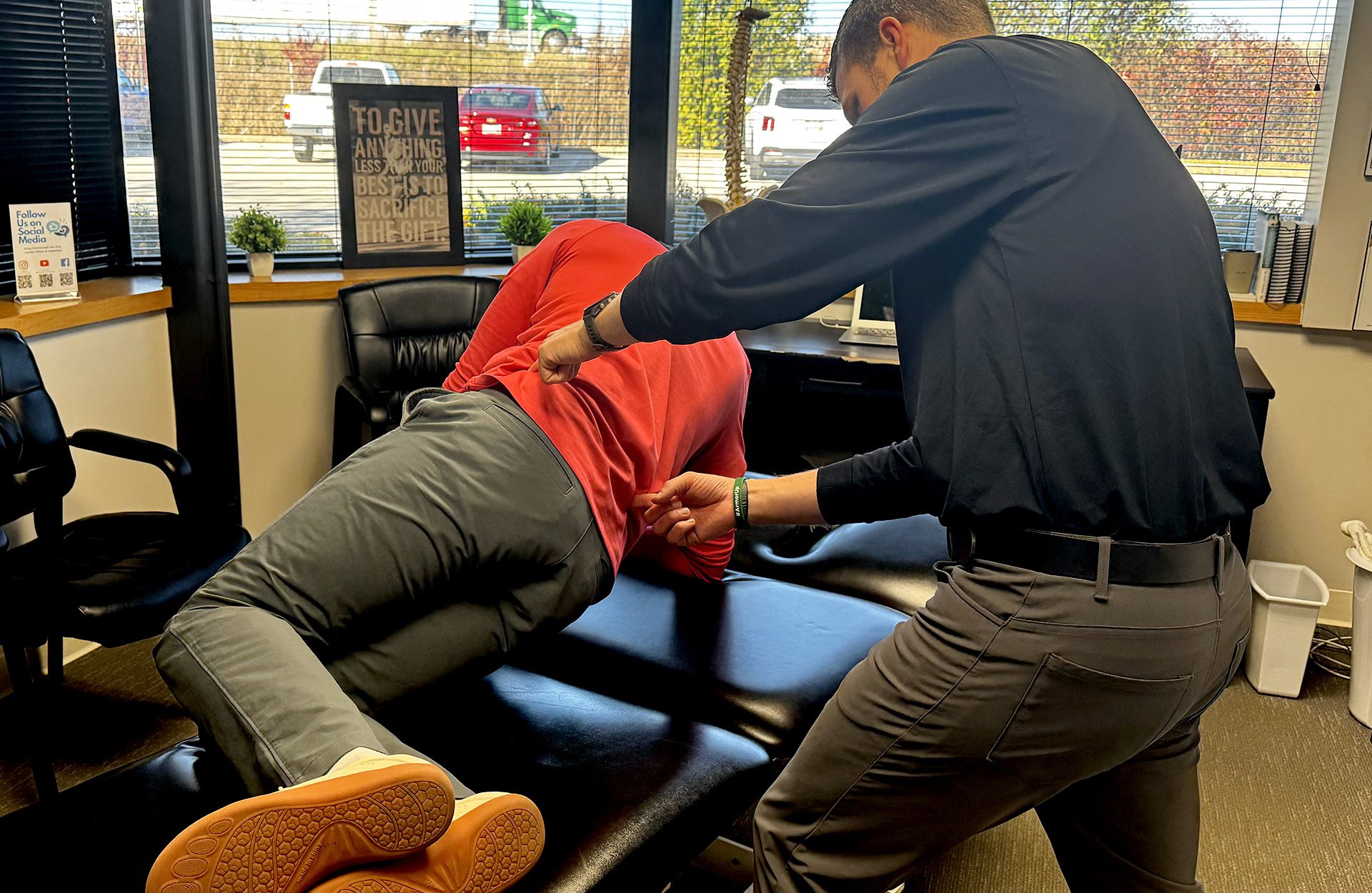
We focus on finding and correcting the root cause of your IT band pain—not just treating the symptoms. Our evaluation includes gait analysis, movement screening, and orthopedic testing to identify muscle imbalances and faulty mechanics from hip to knee. Treatment combines manual therapy, Graston Technique, Active Release Technique (ART), and dry needling to release tight tissues, break down adhesions, and restore healthy mobility.
Once pain and tension are reduced, we guide you through targeted corrective exercises—like glute bridges and clamshells—to strengthen the glutes and rebalance hip control. This helps reduce strain on the IT band and prevents future irritation. Most patients notice improvement within just a few visits, experiencing smoother movement, improved stability, and pain-free performance.