
The Demands on the Achilles Tendon
The Achilles tendon plays a vital role in every step you take—absorbing and releasing massive forces to propel you forward. During running, it endures stress up to seven times your body weight, making it one of the most frequently injured tendons in active individuals. The Achilles connects your calf muscles (the gastrocnemius and soleus) to your heel bone, twisting 90 degrees to act like a spring for powerful, efficient movement. But when training intensity or mileage increases too quickly, this structure can become overloaded, leading to inflammation, stiffness, and pain.
Early symptoms of Achilles tendonitis often include morning tightness, tenderness along the tendon, or a “creaky” sensation with movement. If left untreated, it can progress into Achilles tendinosis—a degenerative condition that causes thickening or nodules in the tendon tissue. Identifying the cause early and restoring balanced movement is key to full recovery.
Our Integrated Approach to Achilles Recovery
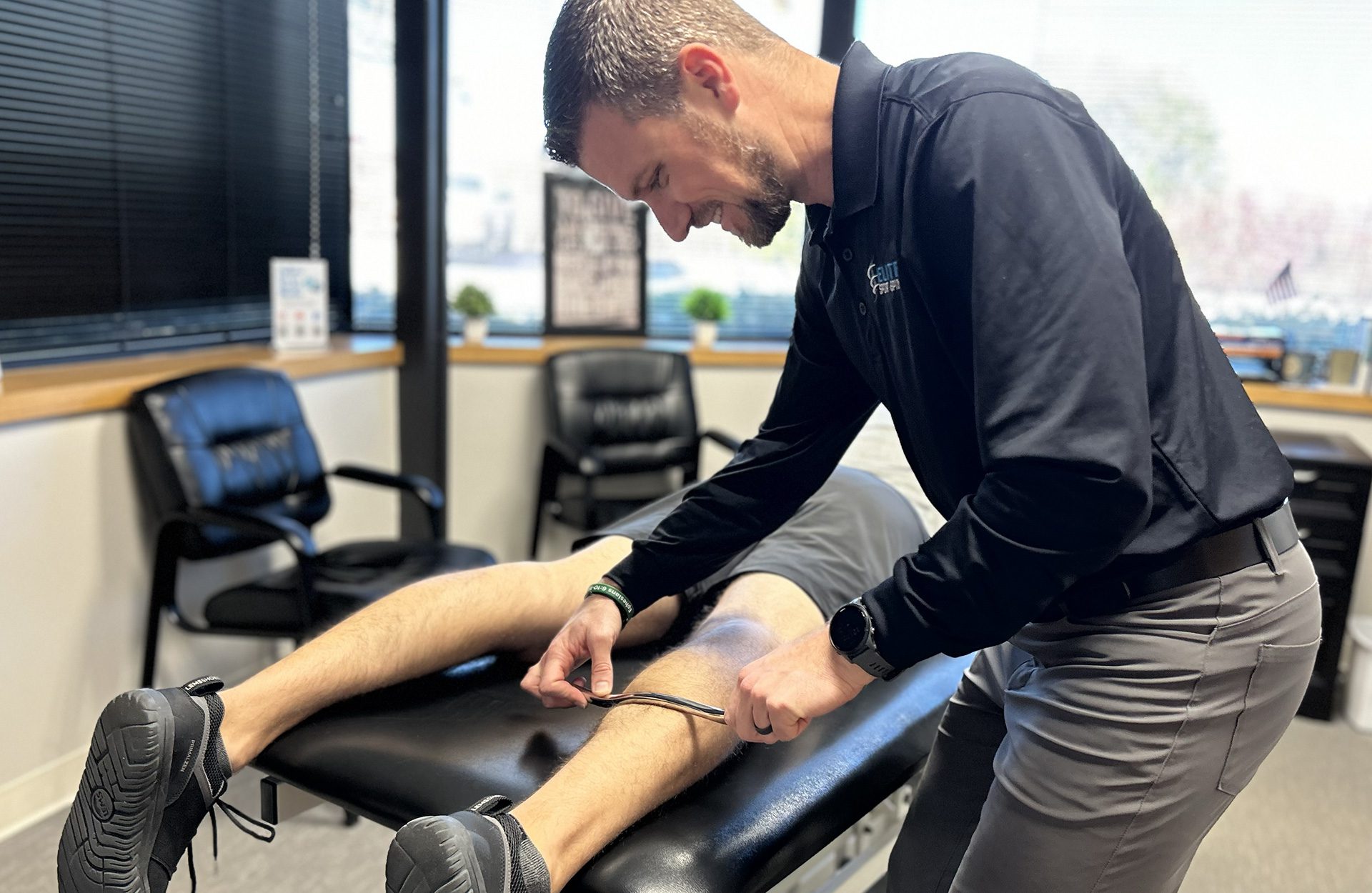
We take an integrated, movement-based approach to Achilles tendon care. Every treatment plan begins with a detailed assessment of your gait and running mechanics to identify imbalances that place excess strain on the tendon. From there, we use advanced soft-tissue techniques—such as Graston Technique, Active Release Technique (ART), and dry needling—to reduce tension, break down scar tissue, and restore mobility.
We also prescribe customized exercises that emphasize eccentric loading—a proven method for strengthening and rebuilding tendon fibers. In partnership with our local running specialists, we ensure your footwear supports optimal performance and protection. Most patients experience relief within just a few sessions and gain the tools to maintain long-term resilience—so you can move confidently, train harder, and stride pain-free.